
Quoted for a New Boiler. We Repaired the One They Had.
When the heating failed at a busy Oxfordshire pub, replacement looked like the obvious answer — and an expensive one. Hi-Tech's mechanical team took a different approach: understand the fault properly before condemning the equipment.
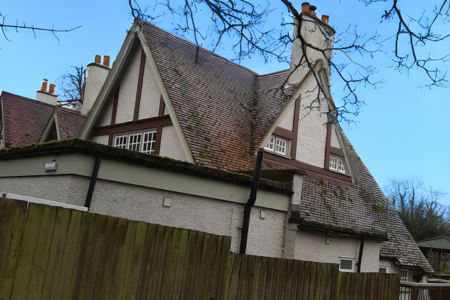
A busy pub. Cold customers. And a very expensive answer on the table.
When a boiler fails in a commercial hospitality property, the consequences are immediate. Customers feel it, staff hear about it and the pressure to restore the heating rises quickly.
That was the position at this busy Oxfordshire pub.
The existing boiler had failed and the customer had already received a substantial quotation for replacement.
Replacing it would certainly have solved the problem. But before committing the customer to the cost and disruption of an entirely new appliance, Hi-Tech wanted to answer a more important question:
Replacement should be a technical decision, not simply the default response to a breakdown.
Open the boiler. Understand the failure. Then make the decision.
Our mechanical team investigated the existing boiler rather than treating the replacement quote as a foregone conclusion.
The appliance was opened up so the internal components and the condition of the boiler could be assessed properly.
The aim was not to repair the equipment at any cost. If the appliance was no longer viable, replacement would still have been the correct recommendation.
But where a safe, reliable and commercially sensible repair can return an existing boiler to service, replacing the whole appliance can create unnecessary cost and waste.
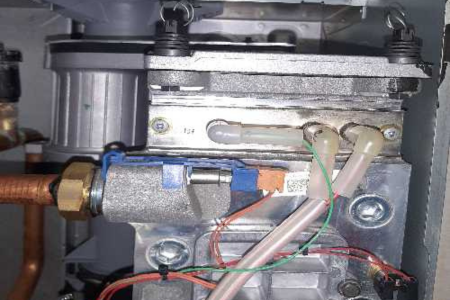
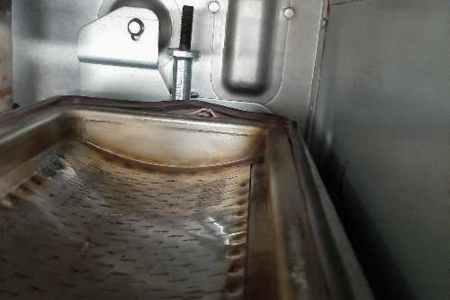
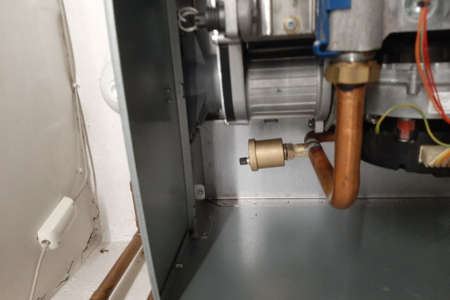
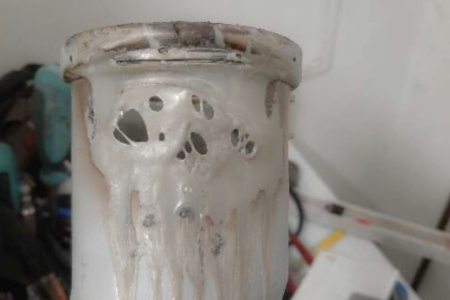
The boiler still had useful life in it.
The inspection showed that the customer did not necessarily need to commit to a complete new boiler simply because the existing appliance had suffered a failure.
The fault could be approached as a repair.
That changed the commercial conversation completely. Instead of removing an entire appliance and replacing working materials along with the failed parts, the focus moved to returning the existing boiler to reliable operation.
This is the principle our mechanical team applies wherever it is technically sensible: repair first when repair represents the better answer; replace when replacement is genuinely justified.
But customers should not have to buy a complete new asset simply because nobody has taken the time to investigate whether the one they already own can be repaired safely and effectively.
Four questions before we condemn an asset.
Repair versus replacement should be a technical and commercial judgement, not an automatic reaction to a breakdown.
What actually failed?
Identify the defective part or system rather than treating the entire appliance as the fault.
What condition is the rest in?
A repair only makes sense where the wider appliance remains suitable for continued service.
Is repair reliable?
A lower initial price is not good value if the solution simply delays an inevitable replacement.
What gives the customer best value?
Consider cost, downtime, future maintenance and unnecessary material replacement together.
Heating isn't background infrastructure when your customers are cold.
Mechanical failures quickly become customer-service problems in hospitality.
A pub needs its heating system working reliably, but it also needs maintenance decisions that make commercial sense.
The objective here was therefore not simply to prove that a boiler could be repaired. It was to give the customer a credible alternative to a costly replacement while restoring the service the property depended on.
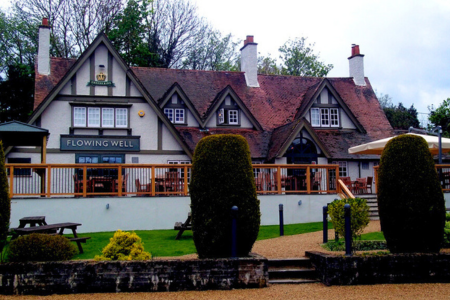
The answer wasn't a new boiler. It was a better diagnosis.
By investigating the existing appliance before accepting replacement as the only option, Hi-Tech was able to approach the failure as a repair rather than an automatic capital replacement.
That kept serviceable equipment in use and avoided removing an entire asset simply because individual components had failed.
For the customer, the important outcome was straightforward: resolve the heating problem without committing to unnecessary replacement where a repair remained a sensible option.
Why repair-first thinking matters.
Customers avoid replacing complete assets where a reliable repair remains technically appropriate.
Keeping usable equipment in service prevents functioning components being discarded unnecessarily.
Diagnosis determines the recommendation rather than the assumption that newer must automatically be better.
Cost, reliability and operational needs are considered alongside the engineering solution.
Mechanical support built around the right answer.
Before you replace it, make sure it actually needs replacing.
Talk to Hi-Tech about commercial boiler breakdowns, gas systems, mechanical repairs and replacement options across operational commercial properties.